01 — EEG
Record the brain.
EEG captures the neural signature of a movement — before the hand even begins to move.
I'm Diar Abdlkarim. I study how the brain moves the body — and build the technology that proves it.
Answering it means closing the loop between perception and action — reading the brain, probing touch, and measuring movement with precision.
EEG captures the neural signature of a movement — before the hand even begins to move.
Psychophysics reveals how skin senses contact, force and texture — and how touch shapes what we do next.

Markerless motion capture measures action to the millimetre. No suits. No markers. Just movement.

From neural signal to shipped product. I work every step of that path.
My research asks a deceptively simple question: how does the brain command the body to act in the real world? Answering it means closing the loop between perception and action — reading neural signals, probing the sense of touch, and measuring movement with precision.
I founded and lead the University of Birmingham's markerless Movement Lab, and work as a research fellow on an ARIA-funded programme decoding naturalistic movement with non-invasive brain–computer interfaces. At Meta, I helped build the hand tracking now integral to Quest. And as co-founder of Motion Dynamics and Obi Robotics, I turn the science into hardware, haptics and XR software — then teach it to other scientists.
From the brain to the fingertip and back again — each thread feeds the next.
Reading how motor plans are formed, predicted and corrected — now as a research fellow on an ARIA-funded programme decoding naturalistic movement with non-invasive BCIs.
How the hand senses contact, force and texture — and how tactile feedback shapes the next movement.
Fine-grained sensorimotor measurement with markerless mocap and hand-tracking hardware, at experimental precision.
XR, HCI and human–robot systems that close the perception–action loop in real time — for research and rehabilitation.
Before a finger so much as twitches, the intention to move is already written across the motor cortex. On the ARIA-funded programme, I work on reading that intention non-invasively — decoding naturalistic movement without a single electrode beneath the skin.
This is the organ in question. Take it for a spin.
Two flagship projects in haptics — feeling the world around you in VR, and feeling through a robot's hand.

A wearable belt of voice-coil actuators that renders unseen obstacles as touch around the waist — restoring awareness of the real environment while fully immersed in VR. First-author work published at CHI 2026, the premier venue in human–computer interaction.

A teleoperation system in which fingertip haptic thimbles relay contact and slip from a remote robot gripper — so human dexterity can handle fragile, unknown objects at a distance. Currently available as a preprint.
At Meta, I characterised the noise and jitter of camera-based hand tracking — then used psychophysical methods to measure exactly what the eye can detect. Those thresholds informed the filtering that holds jitter below perceivable levels, in the hand-tracking pipeline that ships on every Quest headset.

Hardware, software and studies that turn sensorimotor science into things people can use.
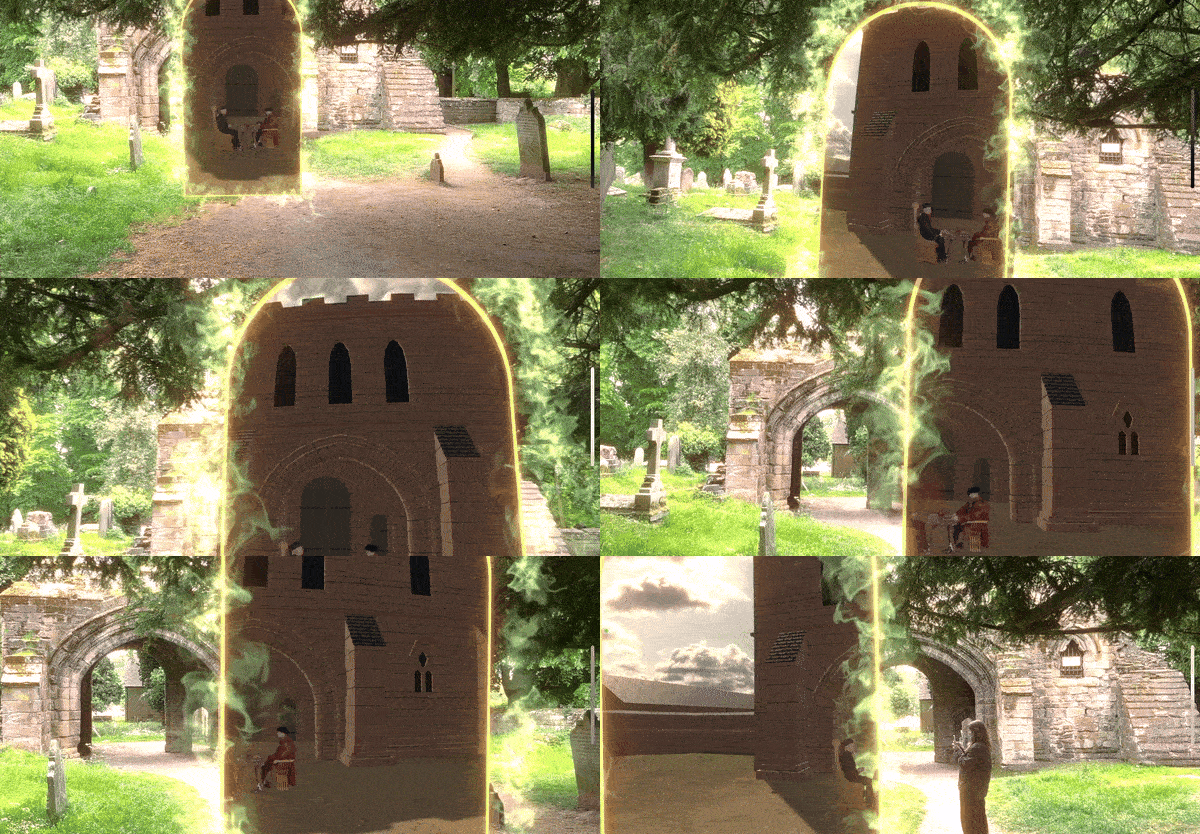
AR that lets visitors step into Kenilworth's history — university innovation, delivered to the community.
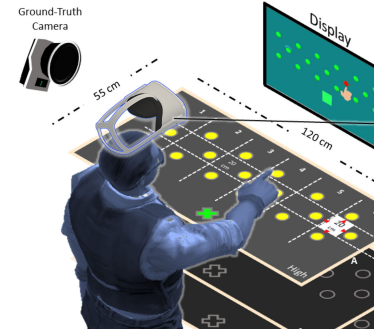
Camera-based hand tracking, now integral to the Quest line.
Every finger, tracked at high rate — with integrated haptics for precise XR and robotics control.
Standard video becomes joint-level motion analytics — no suits, no markers, live from a single camera.
Portable fingertip assessment, built to speed tactile neuropathy diagnosis.
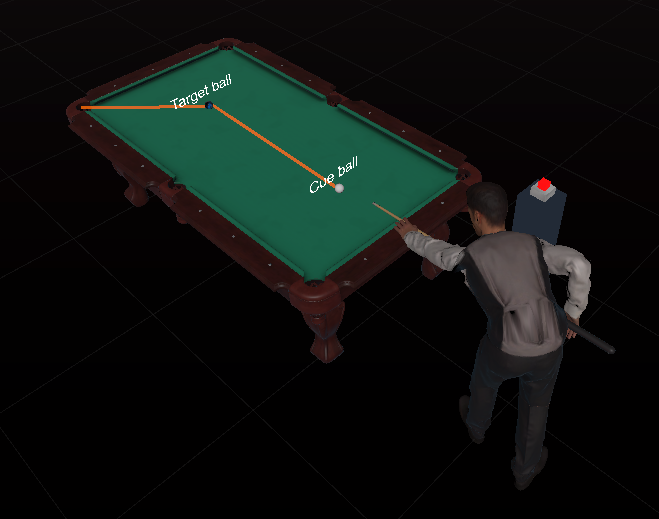
A billiards task with impact-synchronised wrist feedback.
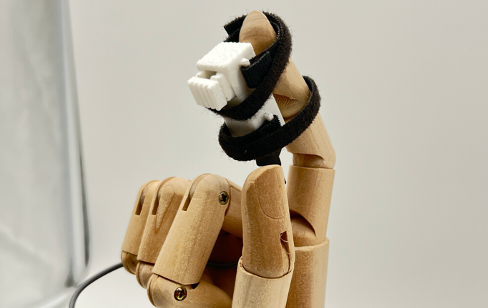
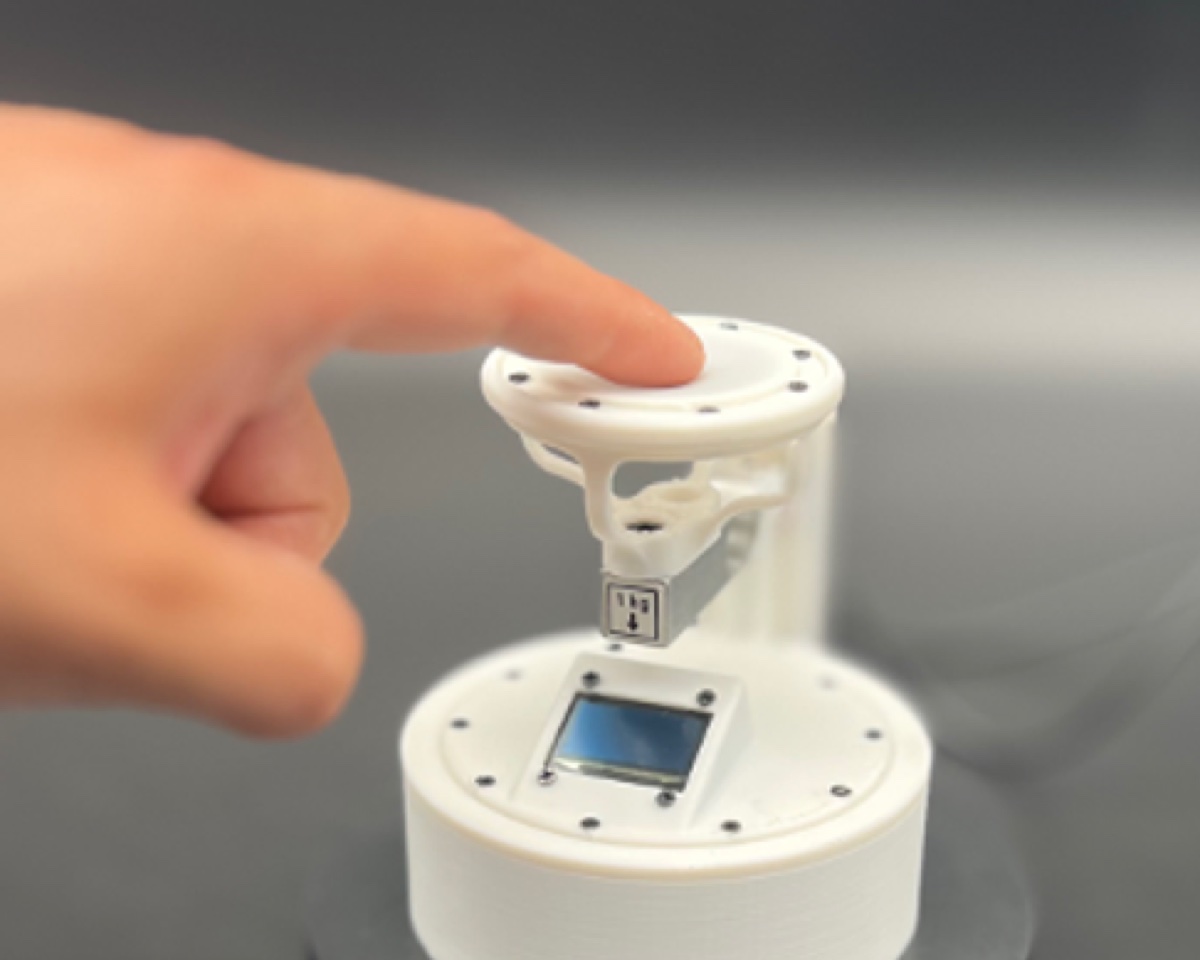
Physical button-press sensations, rendered with controllable indentation.


Facilities, collaborations and companies that let new science happen — and the people mentored to deliver it.

I designed, specced and established a state-of-the-art markerless motion-capture facility — now a shared research asset used across groups at the University of Birmingham, and a magnet for collaborators and grant co-investigator roles.

I opened an independent direction applying kinematic assessment to sign-language acquisition, and mentor the PhD researcher delivering it — reflected in our co-authored publications.

I initiated a cross-college neuroscience × immersive-simulation collaboration — and converted it into a funded PhD studentship, bringing new research income and people into the group.

Through Motion Dynamics, the Kenilworth Revealed AR heritage project and training courses for scientists, the research leaves the lab — as products, skills and community.
Selected work across HCI, sensorimotor neuroscience and XR.
Grants, awards and translation funding across research and enterprise.
Text Entry for XR Trove (TEXT) — a review of text input techniques.
Named postdoc delivering XR music system integration & studies.
Gift to explore ten-finger text entry for VR/AR.
Innovate UK market validation for the AR musician system.
Selected as a finalist; the fund was later withdrawn nationally.
Portable tactile neuropathy assessment proof-of-concept.
Immersive biofeedback for upper-limb rehabilitation.
Intensive, hands-on training taught from real lab experience. Two cohorts a year. Small groups. You leave with something that works.
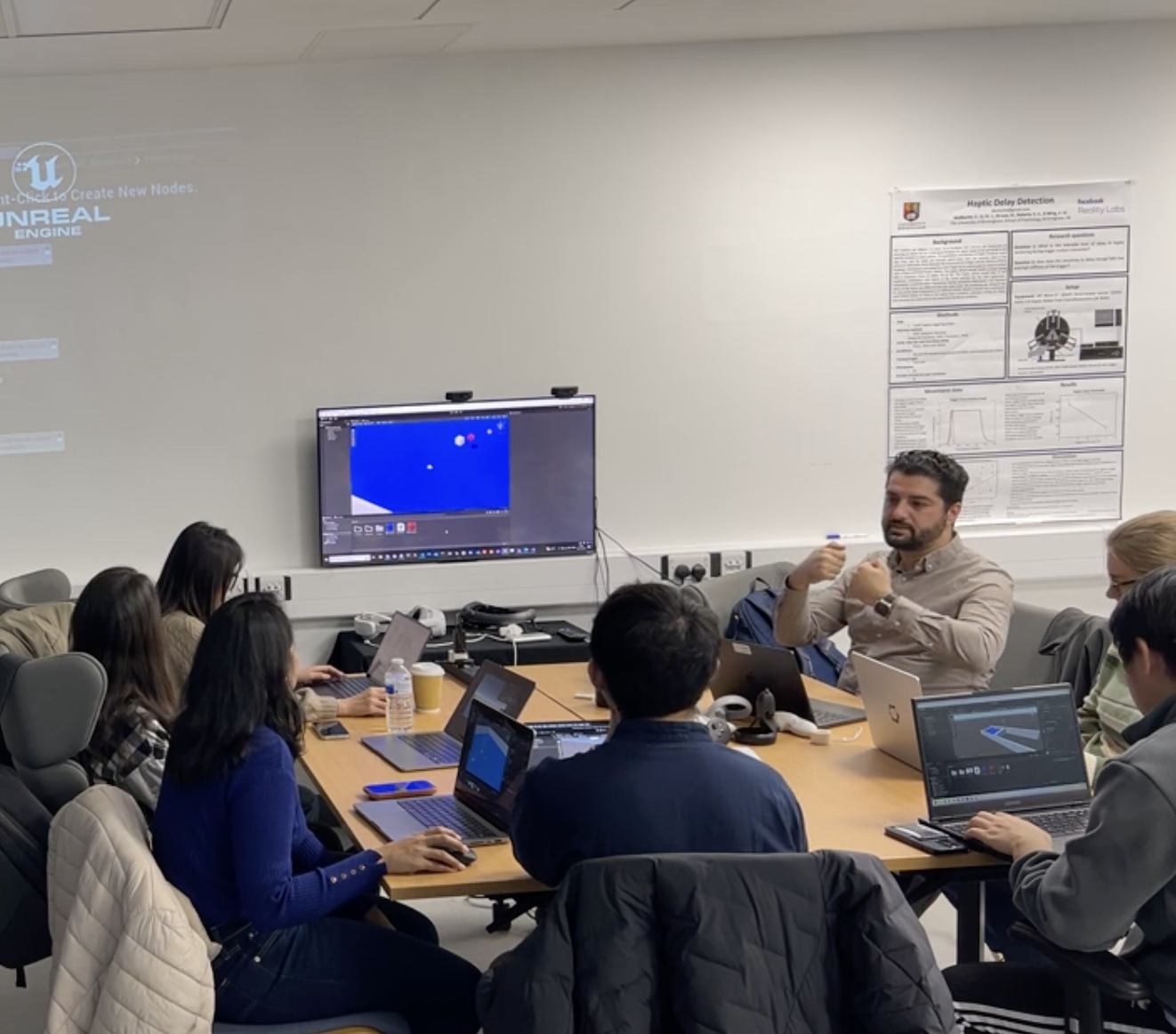
Build and run a VR experiment in a game engine — from empty scene to logged data.
Sign up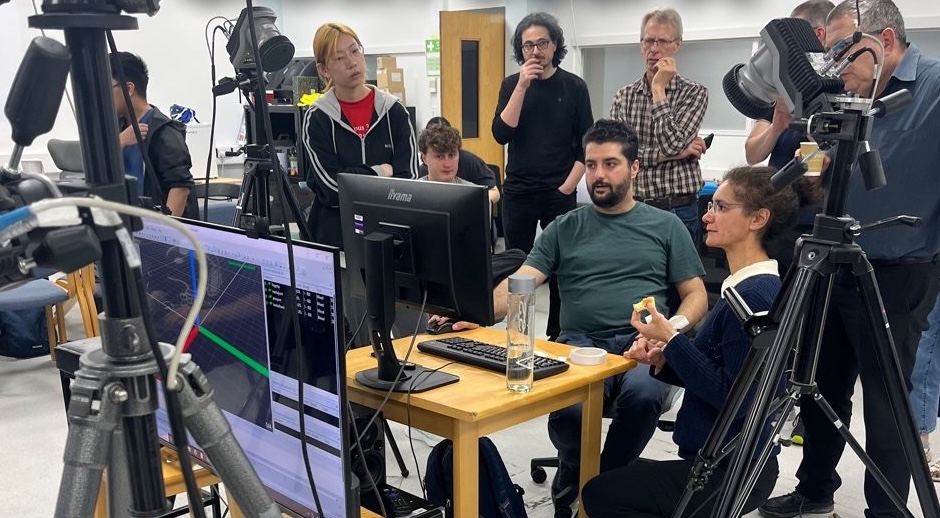
Set up, capture and analyse motion data end to end — calibration to kinematics.
Sign upNot sure which fits — or want a course delivered to your lab?
Explore the courses →Working with schools to bring immersive technology into children's learning — filming costumed historians against green screens and reconstructing historical environments in 3D, so pupils can step into the history they study.
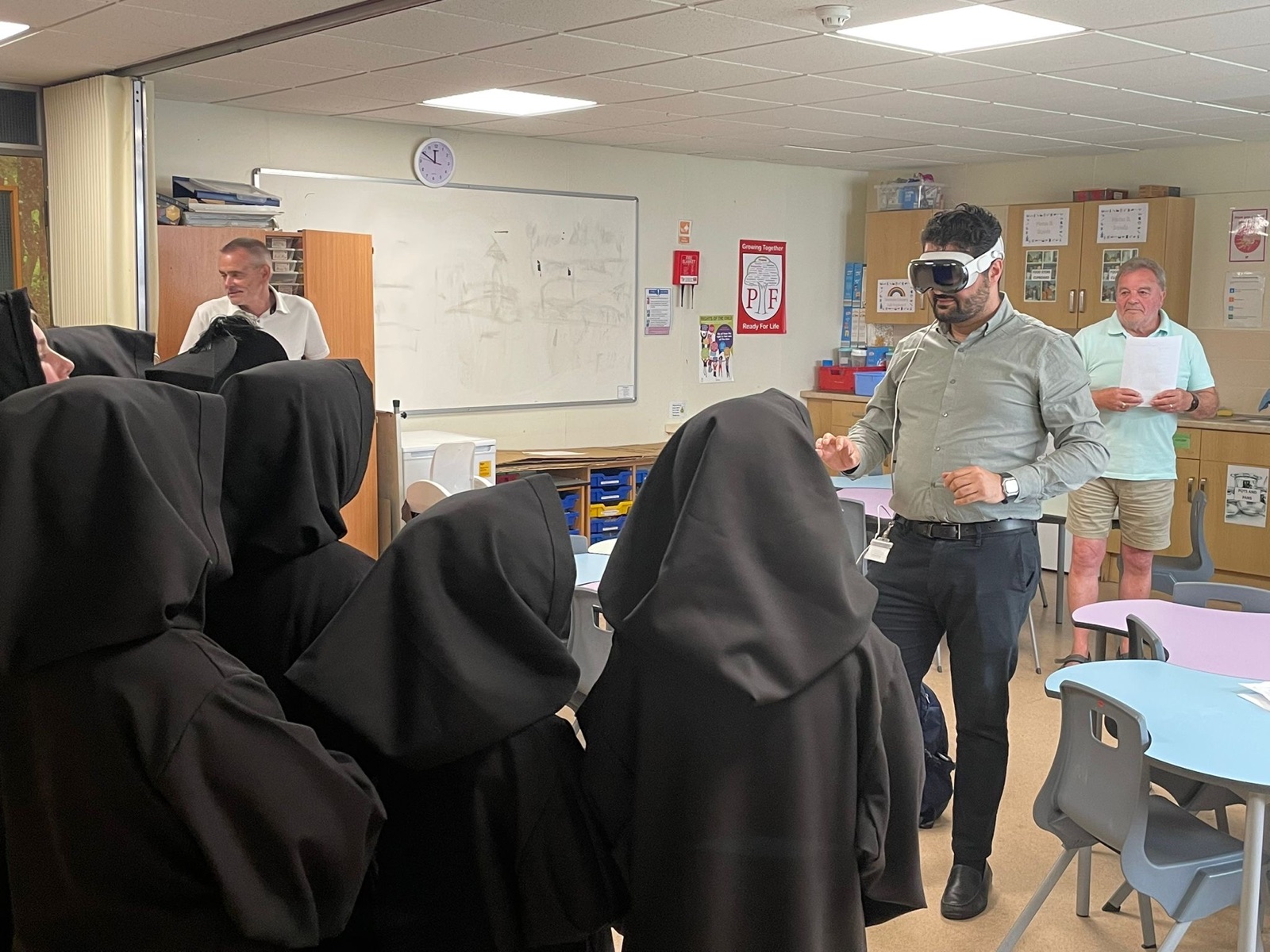
Pupils — dressed for the period themselves — explore immersive reconstructions in school sessions.
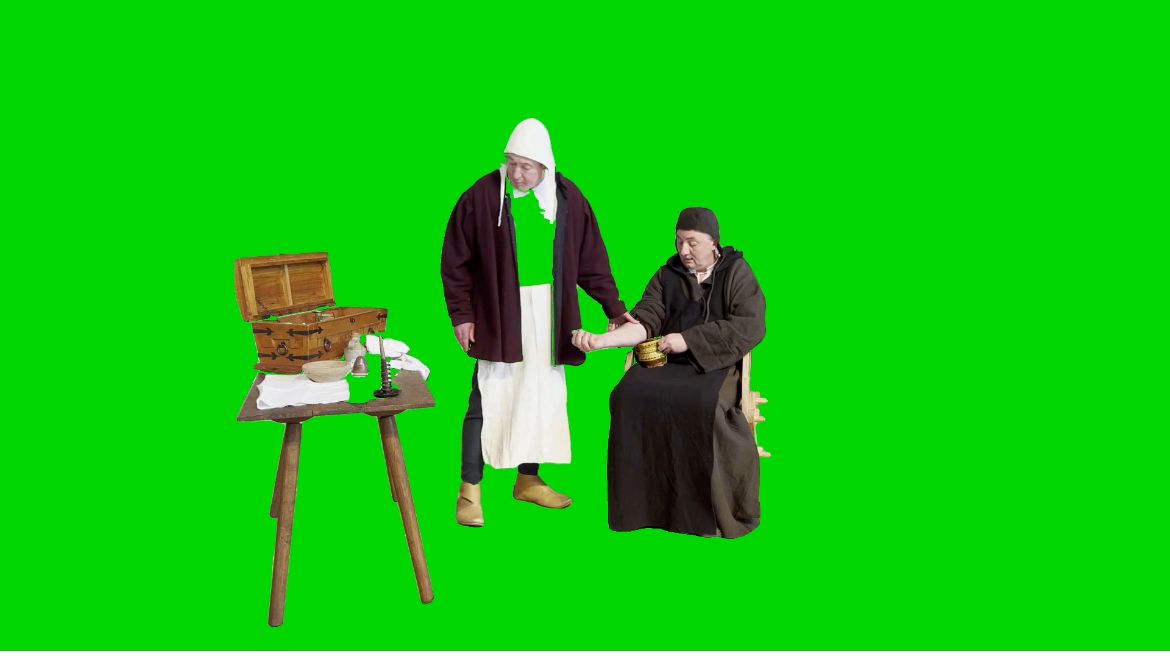
Costumed historians, keyed out and composited into 3D scenes.
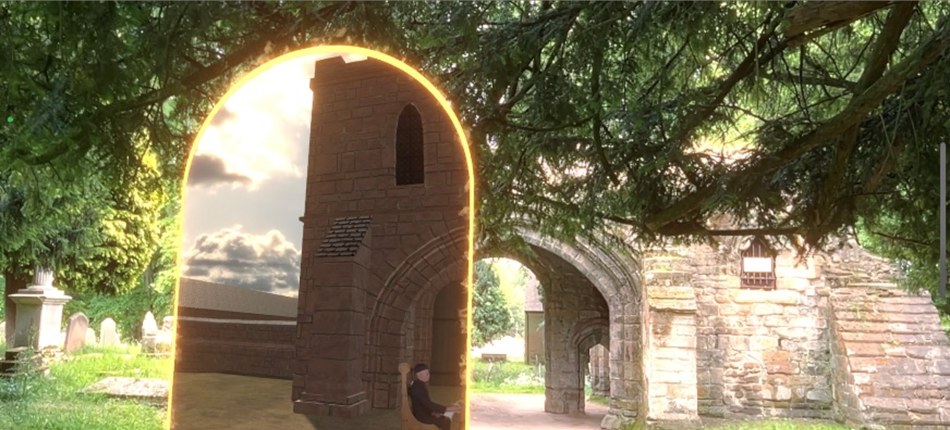
Historical environments rebuilt in 3D and viewed in AR, on site.
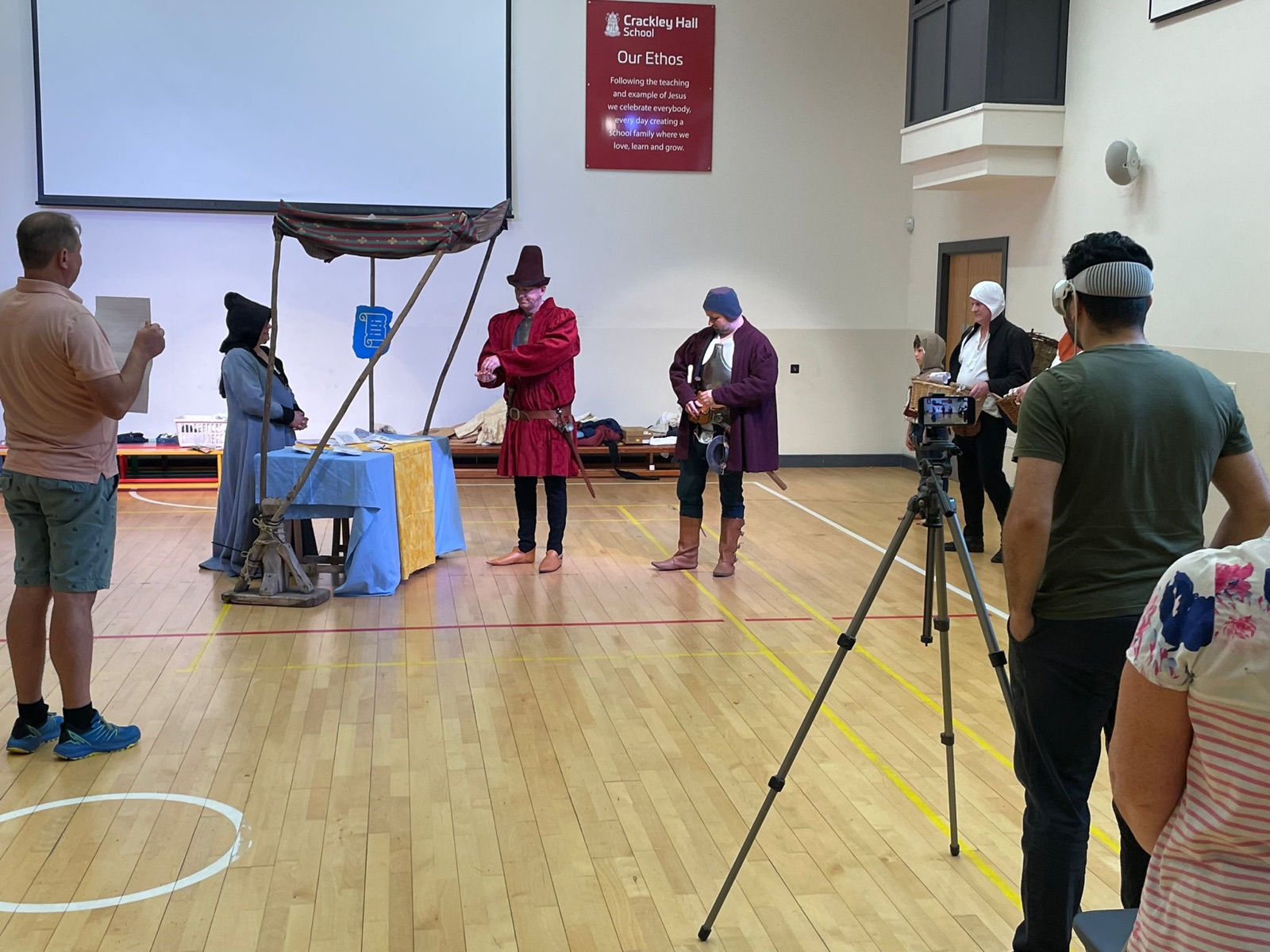
Scenes performed by reenactors, captured for the digital reconstructions children explore.
Watching children's hands move from objects to glass sparked the next research programme: how hands-on, effortful play builds young minds in a screen- and AI-mediated world — and how technology can hand that work back. I'm currently applying for a major international research fellowship to pursue it. More once I can share details.


Collaborations, PhD supervision, speaking, consulting — or a conversation about how the brain moves the body. To join a course, use the course sign-up page.